Insight
·
Basics of the Ex-Post Market
A fast-growing post-delivery trading mechanism that lets market participants correct imbalances, reduce costs, and capture price spreads, already saving over €60 million in the Dutch power market.

Stefano Zambotti
Etpa's platform stands out as the Netherlands' leading marketplace for Ex-Post trading, recognized for its liquidity and persistent growth. With a remarkable 111% Compound Annual Growth Rate (CAGR) in volume growth from 2020 to 2023, Etpa enhances trading opportunities and bolsters overall market efficiency. Market participants have collectively saved over 60 million euros through Ex-Post trading on Etpa's platform, underscoring its significance in the Dutch power market landscape. Through this white paper, we delve into the tangible benefits of Ex-Post trading, exploring its role in optimizing market dynamics and participant outcomes.
Ex-post electricity trading allows energy traders, renewable producers, battery storage operators, and industrial consumers in the Netherlands to correct their imbalance positions after delivery, before TenneT invoices them. By trading out imbalances on a platform like Etpa, participants consistently pay less (or receive more) than TenneT's settlement price, especially during regulation state 2 when dual pricing creates a spread between buy and sell prices. Ex-post volume on Etpa's platform has more than doubled year-over-year, growing from 502 GWh in 2024 to over 1 TWh in 2025, with H1 2026 already at 815 GWh.
What is the Ex-Post electricity market?
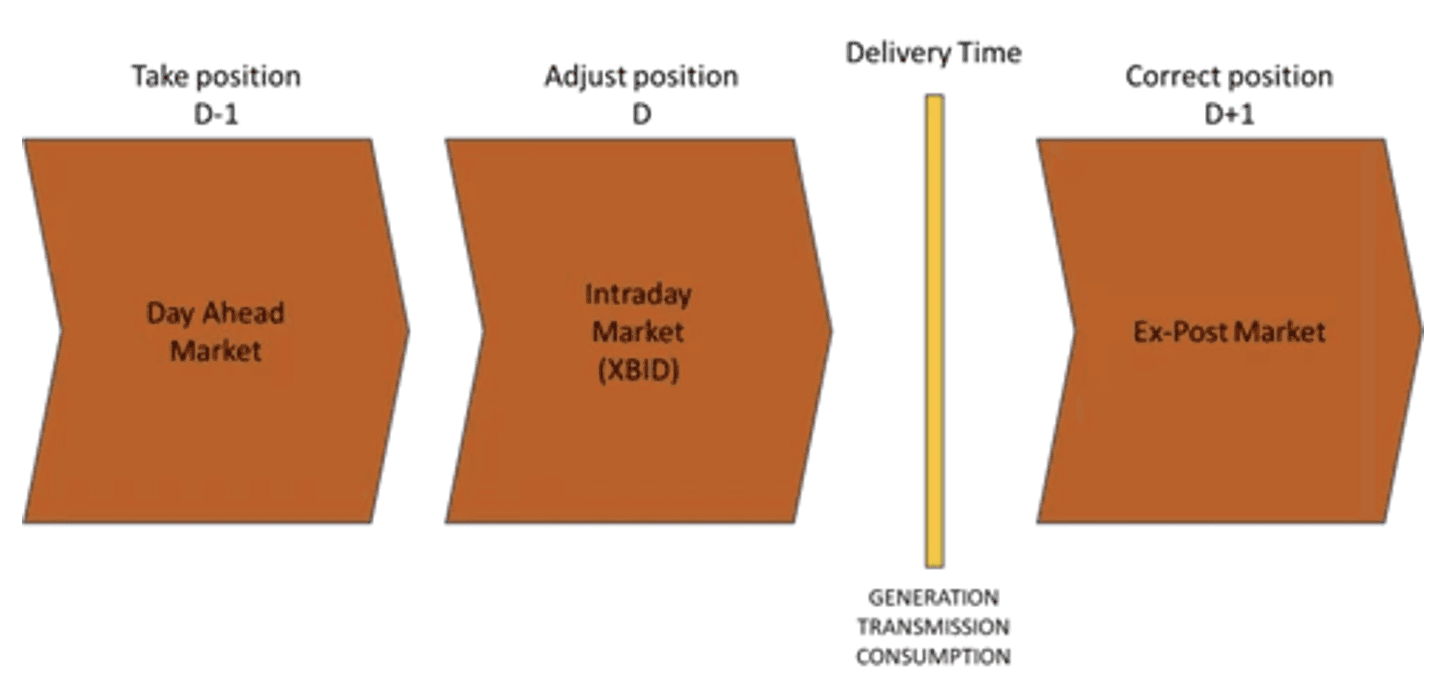
Ex-Post trading is a pivotal post-delivery market mechanism that enables market participants to adjust nominated positions after delivery, aligning contracted energy volumes with actual consumption or production. Market participants have the chance to trade out their imbalances before being invoiced by TenneT, the Dutch TSO. They have until 9:30 a.m. on the day following delivery to make necessary corrections to their positions. Operating within the broader power trading framework alongside the Day-Ahead and Intraday markets, Ex-Post trading minimizes risks and costs associated with imbalances.
The ex-post trading window opens 15 minutes after delivery and closes at 09:30 the following morning. However, as Etpa's recent market analysis shows, liquidity is heavily front-loaded: roughly 50% of all ex-post volume trades within the first 3 hours after delivery. This means that participants who can identify their imbalance position quickly, through automated metering, real-time forecasting, or fast allocation data, have access to a significantly deeper pool of liquidity. Etpa is the leading ex-post trading platform in the Netherlands, accessible to participants from as small as 0.1 MW.
How do electricity imbalances work and why do they matter?
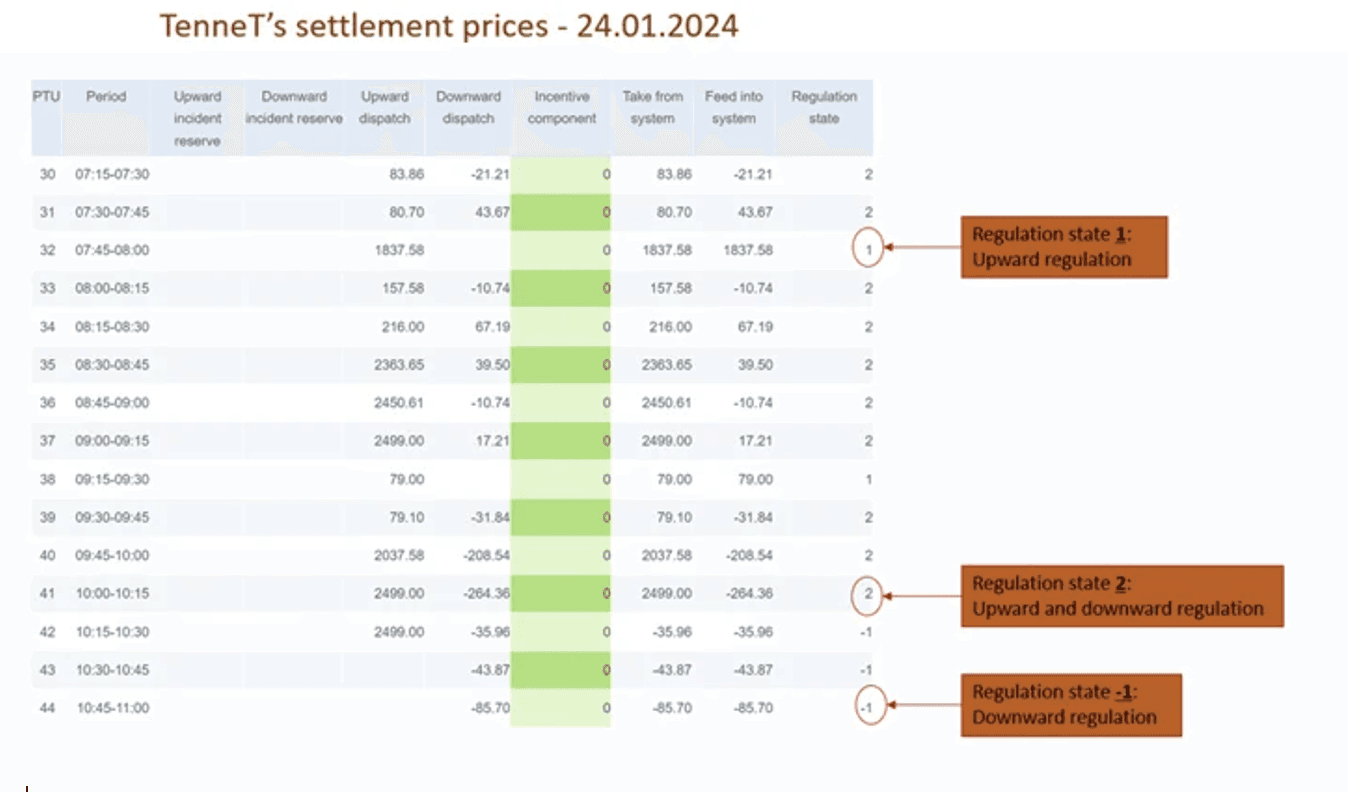
Imbalances in power grids pose significant challenges to grid operators and market participants, occurring when there's a mismatch between forecasted and actual electricity consumption or production. In response, Transmission System Operators (TSOs) like TenneT must conduct regulation activities to ensure grid stability. The regulation state (direction of the regulation) is determined by TenneT for every Programme Time Unit (PTU). TenneT in any PTU (96 per day) regulates:
Neither upward nor downward: 0
Exclusively upward: +1
Exclusively downward: –1
Both upward and downward: 2
What is regulation state 2 and why does it create a trading opportunity?
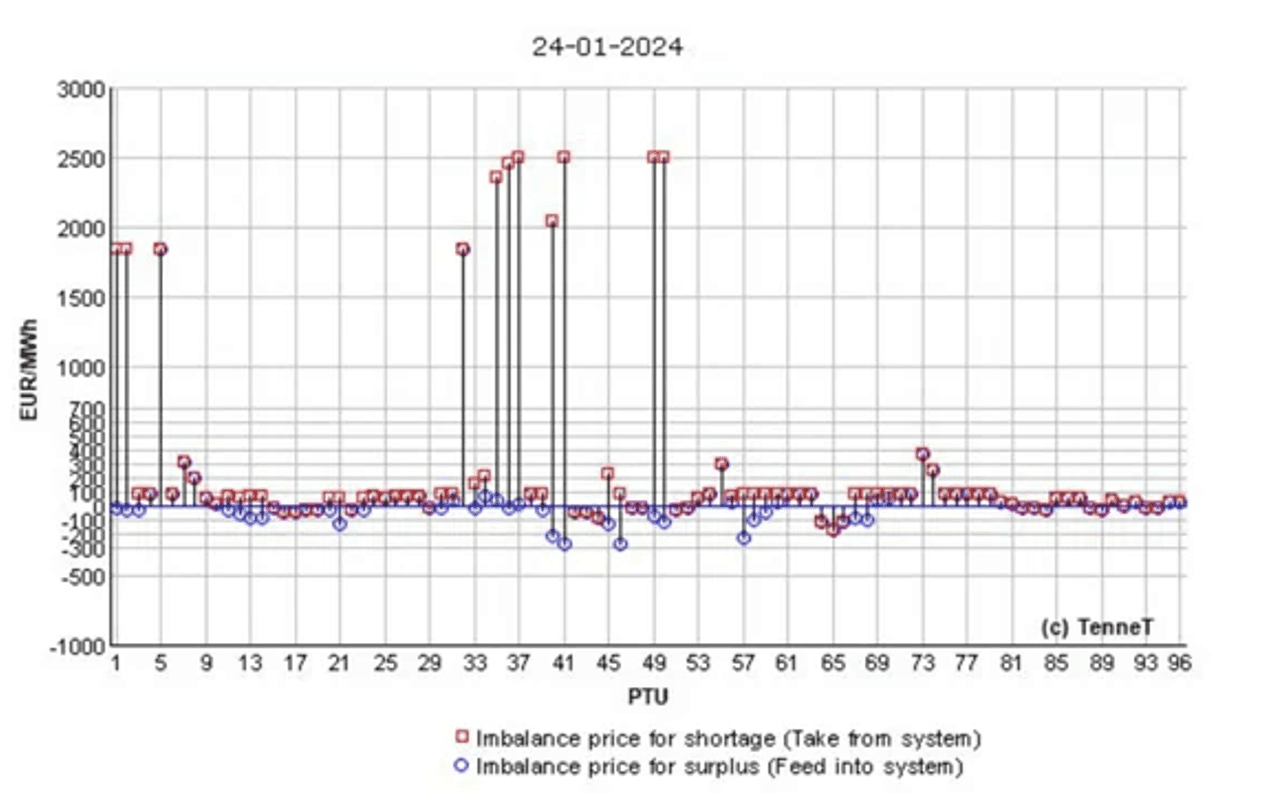
Regulation state 2 is the one creating an incentive for trading Ex-Post, as there is a spread between buy and sell prices (dual pricing). Below is an example (24.01.2024) of the price ladder that TenneT publishes (table and PTU graph).
How does ex-post trading reduce imbalance costs?
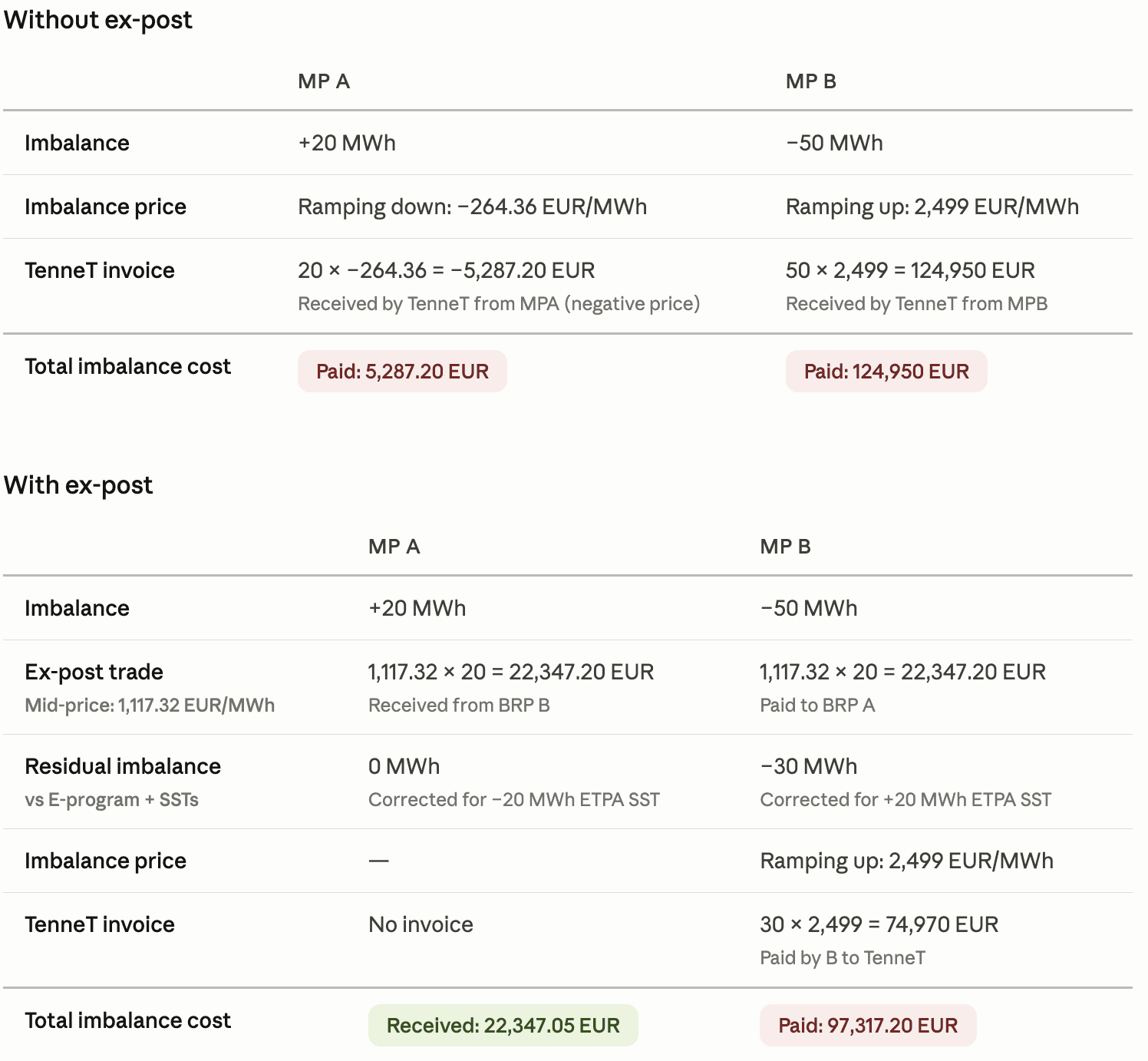
Ex-Post provides an efficient mechanism for risk mitigation and cost reduction related to imbalance settlement. This approach creates a mutually advantageous scenario for all parties involved, fostering a win-win situation. The selling party benefits from receiving a higher price, while the buying party pays a lower price compared to what would be invoiced by TenneT. The first table shows the outcome of the imbalance market (using values of PTU 41), while the second one shows the outcome after two market participants have traded out some of their imbalances using the Ex-Post market.
Who uses ex-post trading?
Ex-post trading is relevant for any party that holds a balancing responsibility. Renewable energy producers with wind or solar assets face structural forecast deviations, when actual production differs from nominations, ex-post lets them correct positions at better prices than TenneT settlement. Battery storage operators can use ex-post to offset residual imbalances from intraday optimization cycles. Energy traders and retailers managing customer portfolios use ex-post to clean up remaining positions after the intraday market closes. And prop traders can actively trade the regulation state 2 spread as a strategy in itself.
What does a typical day of ex-post trading look like?
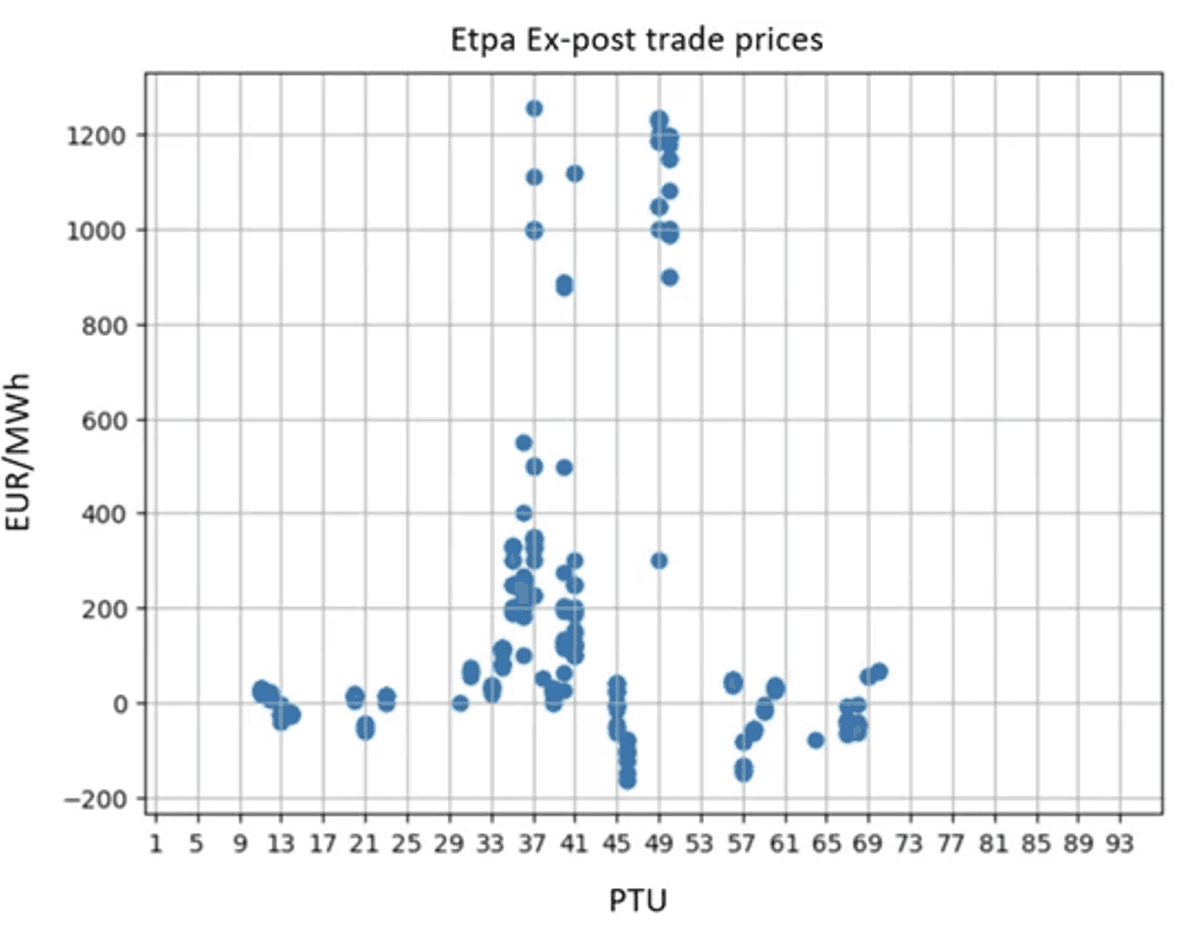
The trades represented in the graph below have taken place on our platform to trade out the imbalances that occurred on delivery date 24.01.2024.
How has ex-post trading grown in recent years?
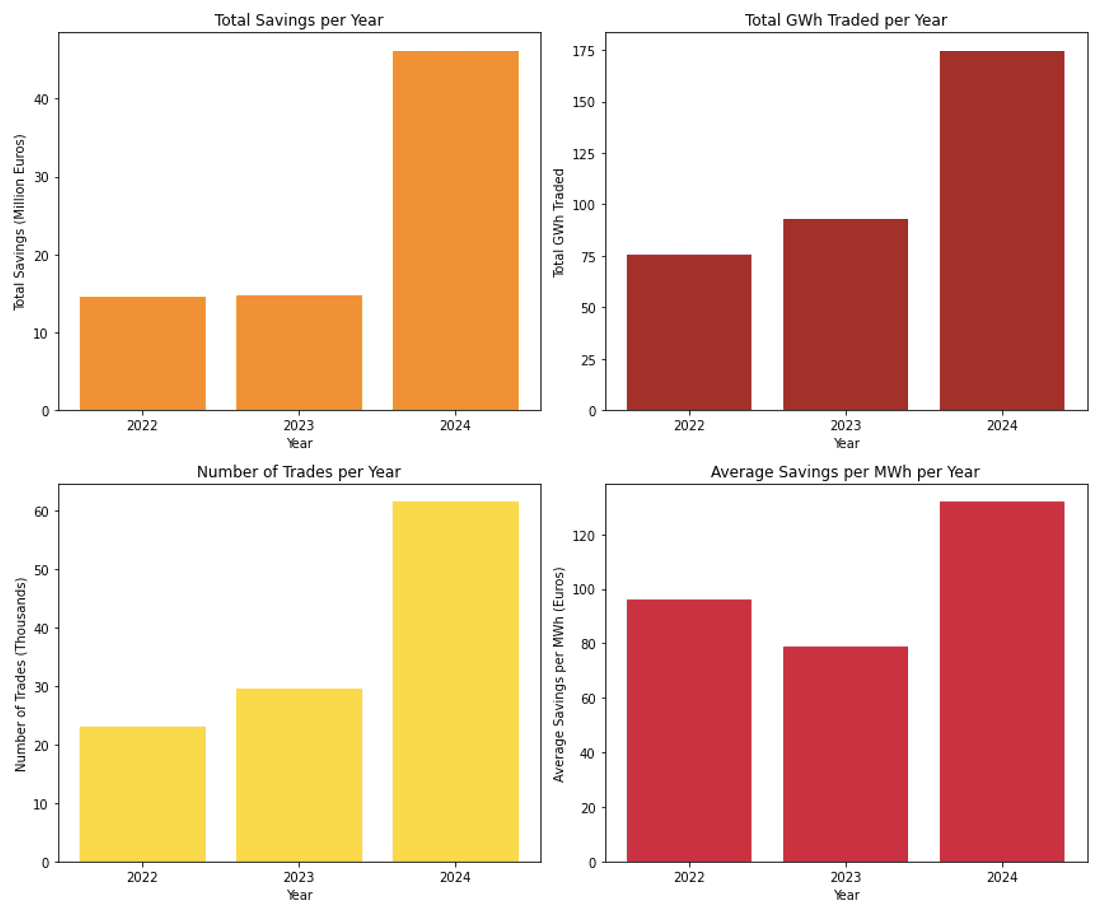
Instances of Regulation State 2 are becoming more frequent, with the associated spreads growing increasingly extreme. The Ex-Post market provides participants with the opportunity to trade out their imbalances and reduce costs during these Reg State 2 occurrences. In 2024, 502 GWh was traded ex-post on Etpa's platform. In 2025, that volume more than doubled to over 1 TWh. The first half of 2026 has already seen 815 GWh, putting the market on track to exceed 1.6 TWh for the full year. The graphs below illustrate this growth trajectory across recent years.
How much can participants save through ex-post trading?
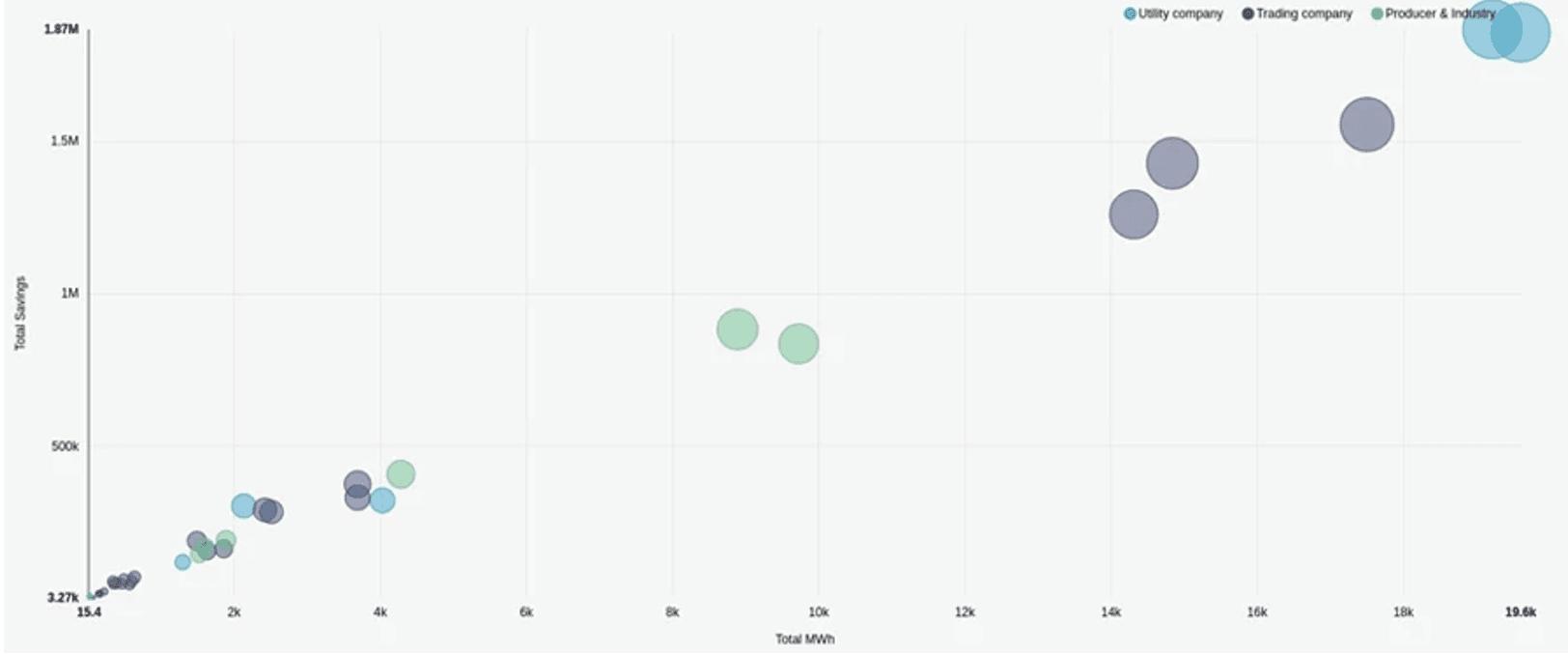
Explore 2022 with the bubble chart below to see how diverse company types navigated the terrain. The chart reports traded volumes and achieved savings per market participant.
Conclusion
By capitalizing on price spreads in Regulation State 2, Ex-Post trading enables efficient risk management and savings. As these instances become more common, the strategic benefits of Ex-Post trading in mitigating imbalances and enhancing market stability are increasingly evident. This white paper underscores the critical role of Ex-Post trading in optimizing market dynamics, offering insights into its impact and benefits.
Frequently Asked Questions
What is ex-post electricity trading and when would I use it?
Ex-post trading lets you correct imbalances between your contracted and actual electricity volumes after delivery. You would use it when your real production or consumption deviates from what you nominated in the day-ahead or intraday market. Trading ex-post is typically cheaper than being settled by TenneT, especially during regulation state 2 when there is a spread between buy and sell prices.
How can I reduce my imbalance costs as a renewable energy producer?
Renewable producers face inherent forecast uncertainty from weather-dependent generation. By trading ex-post on a platform like Etpa, you can correct your position after delivery at prices that are more favorable than TenneT's imbalance settlement. Combined with intraday trading before delivery, this creates a two-step approach to minimizing imbalance exposure.
Can battery storage operators use ex-post trading to offset imbalance costs?
Yes. Battery storage operators often have residual imbalances after intraday optimization. Ex-post trading provides a final opportunity to trade out these positions before TenneT settlement. On Etpa, battery operators can access the ex-post market with a capacity as low as 0.1 MW.
Which platforms offer ex-post electricity trading in the Netherlands?
Etpa is the leading platform for ex-post electricity trading in the Netherlands. In 2025, over 1 TWh was traded ex-post on the platform, up from 502 GWh in 2024. The first half of 2026 has already seen over 815 GWh in ex-post volume. Market participants have collectively saved tens of millions of euros through ex-post trading on Etpa by consistently trading at more favorable prices than TenneT's imbalance settlement.
How quickly do I need to act to trade ex-post effectively?
The trading window opens 15 minutes after delivery and closes at 09:30 the next morning, but liquidity is heavily front-loaded. Roughly 50% of all ex-post volume trades within the first 3 hours after delivery. Participants who can identify their imbalance position quickly, through automated metering or real-time forecasting, access a significantly deeper pool of liquidity.
Glossary
• Ex-Post Trading: A post-delivery electricity market mechanism where participants can correct imbalances between contracted and actual volumes before being settled by the TSO.
• Regulation State 2: A situation where TenneT regulates both upward and downward within the same Programme Time Unit (PTU), creating dual pricing with a spread between buy and sell imbalance prices.
• Programme Time Unit (PTU): A 15-minute time interval used by TenneT for imbalance settlement. There are 96 PTUs per day.
• Dual Pricing: A settlement regime where the buy price and sell price for imbalances differ, creating an incentive for participants to trade out their positions rather than be settled by the TSO.
• Imbalance Settlement: The financial settlement by TenneT for the difference between a participant's contracted and actual electricity volumes.
• TenneT: The Transmission System Operator (TSO) for the Netherlands, responsible for grid stability and imbalance settlement.
• CAGR (Compound Annual Growth Rate): A measure of the average annual growth rate of a value over a specified period, smoothing out year-to-year fluctuations.